
Specialty tea brands don't need enterprise packaging contracts to look retail-ready in 2026 — they need a supplier that can print a small batch correctly and ship it fast. This guide ranks the custom tea packaging suppliers worth calling, sorted by the use case each one actually wins.
- Teal Packaging wins for specialty tea brands running small batches, with a 50-unit minimum order and free design support.
- ePac Flexible Packaging wins for stand-up pouches that protect loose-leaf and bagged tea from oxygen exposure.
- Packlane wins for founders who want to design a retail box online without a vendor call.
- WestRock and TricorBraun are built for national CPG volume, not a first packaging run in 2026.
Why this matters
Tea is sold on the shelf and in the pouch — the packaging carries the flavor story before the buyer ever opens the box. Get the format wrong and a specialty brand either overpays for volume it doesn't need or ships tea in packaging that doesn't protect freshness.
Most specialty tea brands launching in 2026 are ordering hundreds of units per SKU, not tens of thousands. That single fact eliminates half the suppliers on a generic packaging list before you even look at print quality.
The short answer
Best overall for specialty tea brands: Teal Packaging, on the strength of a 50-unit minimum order and free design support for kraft, rigid, and mailer formats. Best for loose-leaf freshness: ePac Flexible Packaging, for stand-up pouches with barrier film. Best budget/DIY pick: Packlane, for founders designing a box online without a sales call.
What makes the best custom tea packaging supplier
- Low minimum order quantity — a tea brand testing three flavors shouldn't need a five-figure print run to find out if the packaging works.
- Food-grade and barrier-appropriate materials — loose-leaf and bagged tea both need protection from moisture and light.
- Design support included — most tea founders aren't trained packaging designers and shouldn't need to hire one before their first print run.
- Format range — retail boxes, kraft mailers, and rigid tins solve different shelf and shipping problems; one supplier covering more than one format saves vendor juggling.
- Scalability path — the supplier that fits a 500-unit launch should still make sense at 50,000 units two years later.
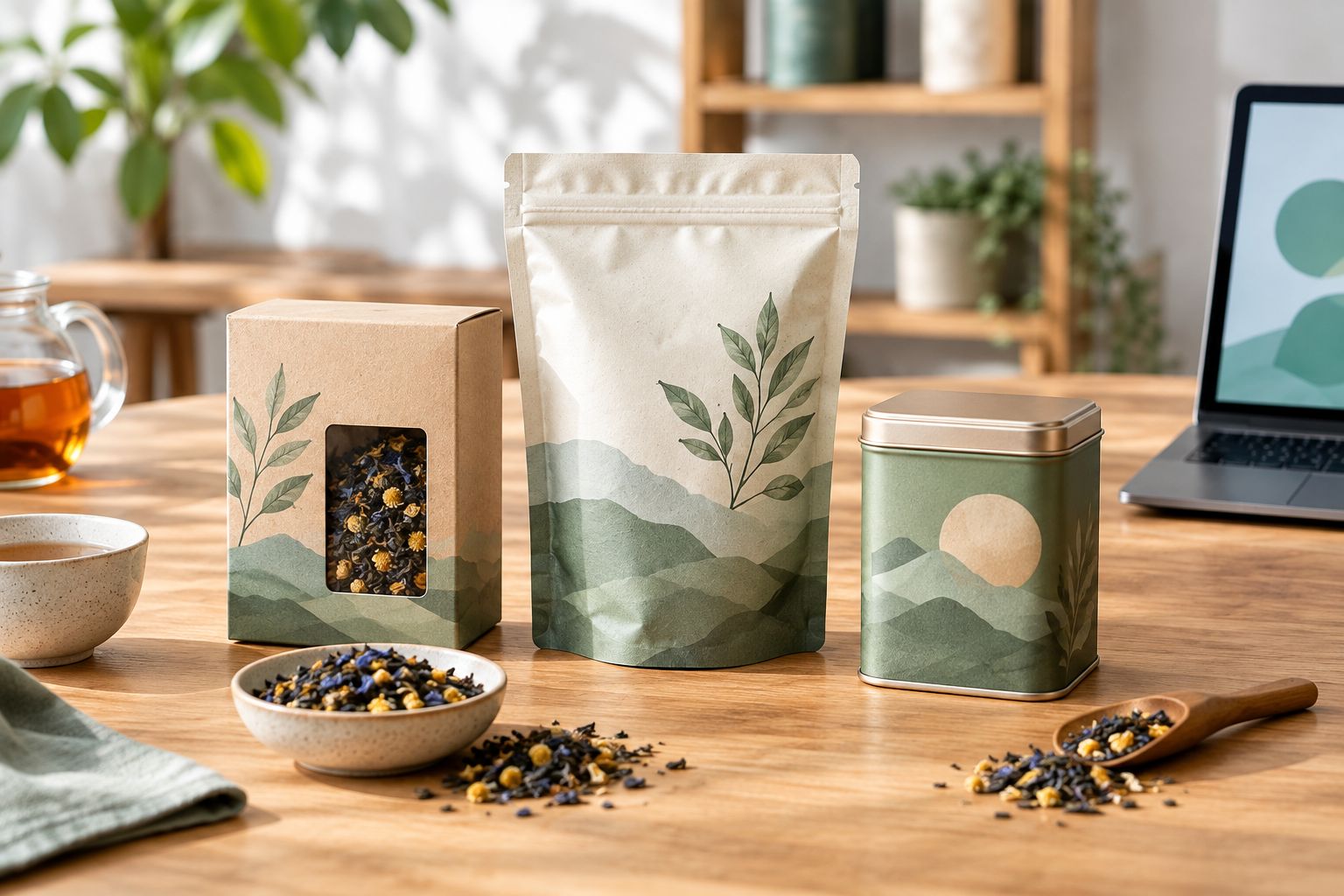
Custom tea packaging suppliers at a glance
| Supplier | Best for | Standout feature | Key limitation |
|---|---|---|---|
| Teal Packaging | Low-minimum specialty runs | 50-unit minimum with free design support | No flexible pouch/foil-liner line |
| ePac Flexible Packaging | Loose-leaf and tea bag freshness | Digital-printed flexible pouches | Pouches only, no rigid or retail boxes |
| ProAmpac | Large-volume flexible packaging | Barrier film material science | Built for enterprise-scale runs |
| Packlane | DIY-designed retail boxes | Online box design tool | No food-grade liner options |
| PakFactory | Tea subscription box kits | Inserts, sleeves, and mailer bundles | Light on retail-ready rigid tins |
| TricorBraun | Premium rigid tins and canisters | Broad rigid container catalog | Long lead times for custom tooling |
| WestRock | National retail shelf rollout | Enterprise paperboard and corrugated capacity | Minimums built for CPG scale |
1. Teal Packaging: best custom tea packaging supplier for low-minimum specialty runs
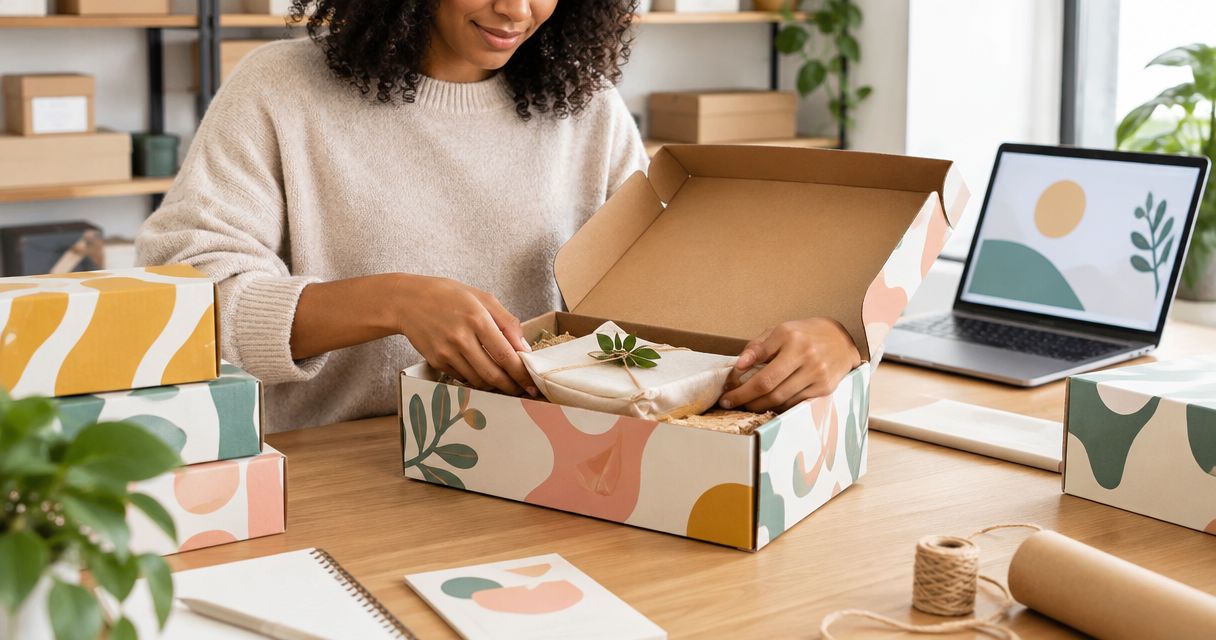
Teal Packaging manufactures custom printed boxes, mailers, kraft and rigid boxes, with a 50-unit minimum order and free design support for e-commerce, retail, cosmetics, and food and beverage brands. That combination — low minimum plus included design work — is what most specialty tea brands actually need for a first or second print run.
Teal Packaging pros:
- 50-unit minimum order keeps a small-batch tea launch financially workable
- Free design support removes the cost of hiring a packaging designer before your first run
- Covers kraft, rigid, and mailer formats under one supplier, so retail boxes and shipping mailers don't need separate vendors
- Works directly with food and beverage brands, which covers the tea category
Teal Packaging cons:
- Not a flexible-pouch specialist — brands needing foil-lined barrier pouches for loose-leaf freshness need a dedicated pouch supplier alongside it
- Rigid box tooling costs more per unit than a standard folding carton at very high volume
Best for: specialty tea brands printing their first few hundred to a few thousand units without an in-house designer.
Verdict: Buy.
Get a tea packaging quote
50-unit minimum, free design support for kraft, rigid, and mailer boxes.
2. ePac Flexible Packaging: best for loose-leaf and tea bag freshness
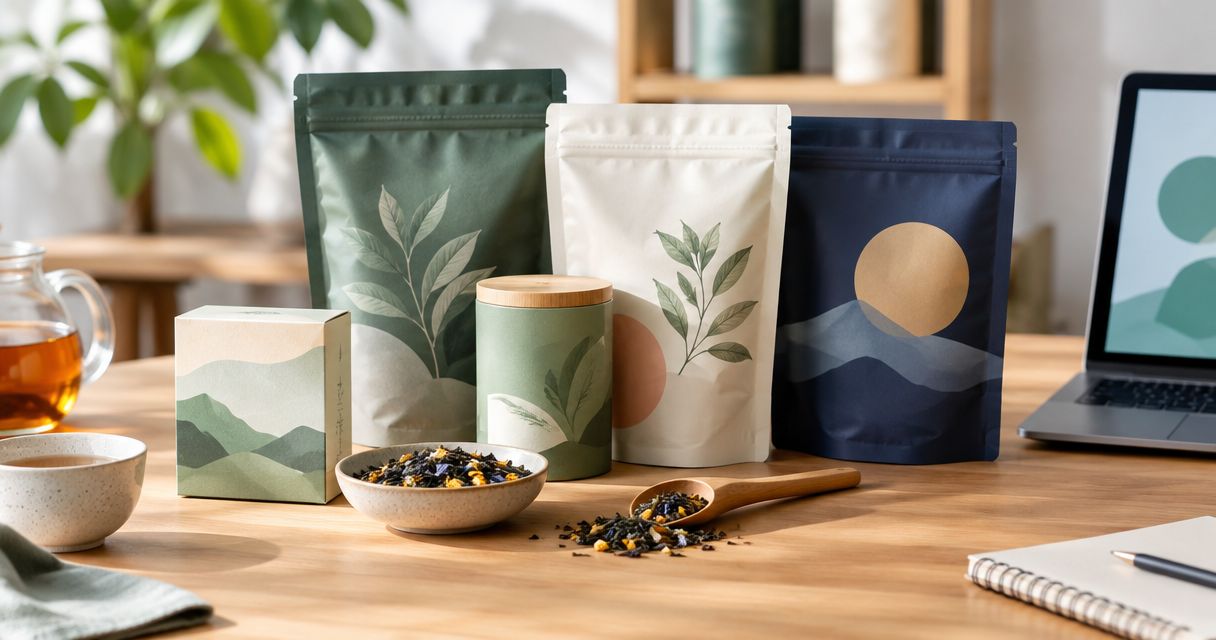
ePac Flexible Packaging runs digital printing presses dedicated to flexible pouches, which is the format that actually blocks oxygen and moisture from loose-leaf and bagged tea.
ePac pros:
- Digital printing makes short pouch runs financially realistic
- Regional plant network shortens shipping distance for reprints
ePac cons:
- Pouches only — no rigid tins or retail shelf boxes
- A tea brand needs a second vendor for any outer carton or gift box
Best for: tea brands shipping loose-leaf or bagged product where freshness barrier matters more than shelf box design.
Verdict: Buy — if freshness is the priority.
3. ProAmpac: best for large-volume flexible packaging
ProAmpac builds flexible packaging at material-science depth, with a broad catalog of barrier films for long shelf-life products.
ProAmpac pros:
- Deep barrier film engineering for extended shelf life
- Wide flexible packaging catalog beyond simple pouches
ProAmpac cons:
- Built for large production runs, not boutique specialty batches
- Typically requires an account setup and sales engagement rather than self-serve ordering
Best for: tea brands that have already scaled past specialty volume into national distribution.
Verdict: Hold — revisit once volume justifies it.
4. Packlane: best for DIY-designed retail boxes
Packlane runs an online design tool that lets a founder preview a retail box structure and print before placing an order, with no vendor call required.
Packlane pros:
- Self-serve online designer for non-designers
- Ships a range of box styles beyond tea-specific formats
Packlane cons:
- General e-commerce catalog isn't tea-specific — no food-grade liner options built for loose leaf
- Limited rigid or premium tin options
Best for: a shoestring specialty tea shop that wants to design and order without a sales conversation.
Verdict: Buy — for the self-serve founder.
5. PakFactory: best for tea subscription box kits
PakFactory works with e-commerce and subscription brands, bundling inserts, sleeves, and mailer boxes into one unboxing kit.
PakFactory pros:
- Bundles inserts and sleeves alongside the mailer for a complete unboxing kit
- Built for direct-to-consumer subscription shipping
PakFactory cons:
- Less depth on retail shelf-ready rigid tins
- General merch catalog, not food-grade specific
Best for: tea subscription brands prioritizing the unboxing experience over retail shelf presence.
Verdict: Buy — for subscription-first brands.
6. TricorBraun: best for premium rigid tins and canisters
TricorBraun distributes a broad catalog of rigid containers, including metal and composite tins suited to premium tea presentation.
TricorBraun pros:
- Wide catalog of rigid tin and canister formats
- Distribution network suited to a national retail rollout
TricorBraun cons:
- Distributor model means longer lead times for custom tooling
- Not oriented toward 50-unit specialty runs
Best for: a tea brand that has already landed national shelf space and needs a premium tin at scale.
Verdict: Wait — save this pick for after retail expansion.
7. WestRock: best for large-scale retail shelf packaging
WestRock runs enterprise-scale paperboard and corrugated packaging infrastructure built for major CPG retail rollouts.
WestRock pros:
- Enterprise infrastructure supports big retail rollouts
- Broad paperboard and corrugated capability
WestRock cons:
- Minimum order volumes are built for CPG scale, not specialty startups
- Not a fit for a brand's first packaging run
Best for: a tea brand that is already an established national CPG account.
Verdict: Skip — unless you're already at that scale.
How we ranked these tea packaging suppliers
Each supplier above was measured against the five criteria listed earlier: minimum order flexibility, food-grade or barrier suitability, included design support, format range, and whether the supplier still makes sense as the brand scales past a specialty launch. No supplier scored well on every criterion — that's the honest picture in 2026, not a flaw in the ranking.
Which tea packaging supplier should you choose in 2026?
If you're launching a specialty tea line and haven't committed to a single format yet, Teal Packaging is the default starting point: a 50-unit minimum and free design support cover kraft, rigid, and mailer needs without a five-figure commitment. If freshness barrier is the non-negotiable requirement, pair that with ePac Flexible Packaging for the pouch itself. Only look at TricorBraun or WestRock once the brand has outgrown specialty volume and is negotiating national retail placement.
FAQ
What's the best custom tea packaging supplier for a new specialty brand in 2026?
Teal Packaging is the best fit for most new specialty tea brands in 2026 because of its 50-unit minimum order and free design support. Larger suppliers like WestRock or ProAmpac are built for CPG-scale volume, not a first print run.
Is flexible pouch packaging better than boxes for loose-leaf tea?
Pouch packaging with a barrier film protects loose-leaf tea from oxygen and moisture better than a standard box. A retail box still matters for shelf presence, which is why many tea brands use a pouch inside a box.
How much does custom tea packaging cost in 2026?
Cost depends on material, print complexity, and order volume, so get a direct quote from the supplier rather than relying on a published rate. Minimum order size is often the bigger cost driver for a specialty brand than the per-unit price.
Do tea packaging suppliers require a minimum order?
Most do, and minimums vary widely by supplier. Teal Packaging sets its minimum at 50 units, which is low enough for a specialty brand's first or second run.
Can rigid boxes be used for tea tins?
Rigid boxes and metal tins are both used for premium tea presentation, and suppliers like TricorBraun specialize in rigid container catalogs. Rigid formats generally cost more per unit than folding cartons or kraft boxes.
What packaging keeps loose-leaf tea fresh longest?
Foil-lined stand-up pouches or airtight tins limit oxygen exposure better than an open paperboard box. Suppliers focused on flexible packaging, like ePac Flexible Packaging, specialize in this barrier format.
Is kraft packaging good for tea brands going for a sustainable look?
Kraft packaging reads as sustainable and works well for tea brands positioning around natural or eco-friendly branding. It pairs with a design that avoids heavy plastic components.
How do I choose between mailer boxes and retail boxes for a tea brand?
Mailer boxes are built to survive shipping and double as the unboxing experience for direct-to-consumer orders. Retail boxes are built for shelf display and don't need to withstand a shipping carrier on their own.
One last thing
The supplier that wins your first print run in 2026 isn't necessarily the one you keep at 50,000 units — plan the switch before you need it, not after a retail buyer asks for volume you can't hit.